214-256-3778
(214) 256-3770

Dallas Orthopedic and
Shoulder Institute
Orthopedic Specialists in Sunnyvale and Kaufman, TX
Dallas Orthopedic and Shoulder Institute
Orthopedic Specialists in Sunnyvale, TX
Why Choose Us?
Tailored Orthopedic Solutions
for a Better Life
At Dallas Orthopedic & Shoulder Institute, we specialize in addressing a wide range of bone, joint, and muscle-related issues, from everyday disorders to more complex conditions like arthritis and fractures. Our approach is highly personalized, tailored to each patient's unique needs. Whether you're dealing with pain from an injury, sports-related strain, or age-related arthritis, we're here to help you find relief and improve your quality of life.
Collaborative Approach to Effective Treatment Plans
We prioritize conservative treatments as the initial approach to managing your condition. Our goal is to work closely with both you and your primary care physician to develop the most effective treatment plan possible. Depending on your diagnosis, our treatment options may include physical therapy, occupational therapy, injections, or medications.
Advanced Surgical Excellence
for Swift Recovery
For patients requiring surgery, we excel in minimally invasive techniques, which involve small incisions and arthroscopes. This approach minimizes post-operative pain, shortens recovery time, and reduces scarring. Even for joint replacements that require open incisions, we employ the latest surgical techniques and technology to speed up your recovery and help you return to your normal activities as soon as possible.
Why Choose Us?
Tailored Orthopedic Solutions
for a Better Life
At Dallas Orthopedic & Shoulder Institute, we specialize in addressing a wide range of bone, joint, and muscle-related issues, from everyday disorders to more complex conditions like arthritis and fractures. Our approach is highly personalized, tailored to each patient's unique needs. Whether you're dealing with pain from an injury, sports-related strain, or age-related arthritis, we're here to help you find relief and improve your quality of life.
Collaborative Approach to Effective Treatment Plans
We prioritize conservative treatments as the initial approach to managing your condition. Our goal is to work closely with both you and your primary care physician to develop the most effective treatment plan possible. Depending on your diagnosis, our treatment options may include physical therapy, occupational therapy, injections, or medications.
Advanced Surgical Excellence
for Swift Recovery
For patients requiring surgery, we excel in minimally invasive techniques, which involve small incisions and arthroscopes. This approach minimizes post-operative pain, shortens recovery time, and reduces scarring. Even for joint replacements that require open incisions, we employ the latest surgical techniques and technology to speed up your recovery and help you return to your normal activities as soon as possible.
Services We Offer
Conditions & Treatments
Providers Services
ACL Injuries
A healthy anterior cruciate ligament (ACL) helps stabilize your knee joint, and the experts at Dallas Orthopedic and Shoulder Institute help prevent and treat ACL injuries. Reed Bartz, MD, swiftly detects signs of ACL injury to provide high-quality care at the office in Sunnyvale, Texas. Learn more and schedule an appointment by calling today or booking through the online reservation system.
Achilles Tendon Injuries
Achilles tendon injuries can, without proper treatment, cause severe ankle pain. At Dallas Orthopedic & Shoulder Institute in Sunnyvale and Kaufman, Texas, the team of highly trained experts offers several treatments for Achilles tendinitis, tendon ruptures, and other Achilles tendon injuries that can restore your mobility and quality of life. Schedule a consultation to find out which Achilles tendon treatment is right for you.
Ankle Replacement
The orthopedic team at Dallas Orthopedic & Shoulder Institute in Sunnyvale and Kaufman, Texas, can help. They offer ankle replacement surgery to replace your joint, improve mobility, and give you a better quality of life. Schedule a consultation with Dallas Orthopedic & Shoulder Institute by phone or online to learn more about ankle replacement.
Ankle Sprain
Ankle sprains might not sound serious, but they can cause intense, crippling pain. If you experience ankle sprains, the highly-trained team at Dallas Orthopedic & Shoulder Institute in Sunnyvale and Kaufman, Texas, is here for you. They offer a wide range of treatments to help you heal quickly and efficiently. Schedule an appointment with Dallas Orthopedic & Shoulder by phone or online today.
Arthritis
Arthritis occurring anywhere in your body can cause unbearable joint pain. It may even cause a limitation in your range of motion, keeping you from performing daily activities. If arthritis starts affecting your quality of life, learn how the team of experts at Dallas Orthopedic & Shoulder Institute in Sunnyvale and Kaufman, Texas, can help. Schedule your arthritis evaluation by clicking on the online scheduling tool or by calling your nearest office directly.
Bone Fracture
Jeff Zhao, DO provides expert care at the Dallas Orthopedic and Shoulder Institute to patients from Sunnyvale, Texas and the greater east Dallas area who have sustained bone fractures.
Bunion Surgery and Bunionplasty
If a painful bunion prevents you from staying active and living life to its fullest, minimally invasive surgery can reduce pain, swelling, and stiffness. At Dallas Orthopedic & Shoulder Institute in Sunnyvale and Kaufman, Texas, the team of highly trained experts offers bunion surgery to repair joint problems and give you a better quality of life. Call the Dallas Orthopedic & Shoulder Institute office for an appointment today or use the online booking tab on this website.
Flat Feet
If you have flat feet, you may find that your feet and ankles always seem to be sore and swollen. Before your flat feet cause you another day of discomfort, see how the expert team at Dallas Orthopedic & Shoulder Institute, with locations in Sunnyvale and Kaufman, Texas, can help. Click on the online booking feature to schedule your flat feet evaluation or call any office directly today.
Frozen Shoulder
When patients from Sunnyvale, Texas and the greater east Dallas area suffer from frozen shoulders, Jeff Zhao, DO at the Dallas Orthopedic and Shoulder Institute provides thorough and effective care to help them return to normal activities.
Heel Pain
Heel pain is a common affliction that can put a hold on your healthy, active lifestyle. At Dallas Orthopedic & Shoulder Institute in Sunnyvale and Kaufman, Texas, the team of experts diagnose and treat heel pain with targeted treatment methods. Whether it’s plantar fasciitis or something more complex, the team helps restore you to peak performance or function. Call or schedule an appointment online today to find out more.
Knee Arthroscopy
If you’re suffering from knee pain but are unsure why, Dallas Orthopedic and Shoulder Institute offers comprehensive knee arthroscopy to locate the root cause. Reed Bartz, MD, provides safe and effective knee arthroscopy treatment to eliminate your discomfort. Call the Sunnyvale, Texas, office to schedule an appointment or book through the online reservation system.
Knee Replacement
When injury or wear and tear on the knee is so extensive that a knee replacement is necessary, Jeff Zhao, DO at the Dallas Orthopedic and Shoulder Institute, located in Sunnyvale, Texas, performs state of the art knee replacement surgeries. Patients from throughout the greater east Dallas area seek expert knee replacement surgery with Dr. Zhao.
Meniscus Repair
If you’re looking for exceptional meniscus repair, look no further than the experts at Dallas Orthopedic and Shoulder Institute. Located in Sunnyvale, Texas, Reed Bartz, MD, offers extensive meniscus treatment options to support your knee and leg health. Call the office today and schedule an appointment to learn more about meniscus repair, or book through the online reservation system.
Rotator Cuff Tear
Patients from in and around Sunnyvale, Texas and the greater east Dallas area receive excellent treatment and care for rotator cuff tears with Jeff Zhao, DO at the Dallas Orthopedic and Shoulder Institute.
Shoulder Injury
Millions of Americans seek treatment for shoulder injuries each year. Jeff Zhao, DO, at the Dallas Orthopedic & Shoulder Institute, located in Sunnyvale, Texas, provide expert care to patients from throughout the greater east Dallas area with shoulder injuries, helping them to find pain relief and return to normal activities.
Sports Medicine
Playing sports or engaging in any regular physical activity isn’t just enjoyable but serves as a great way to stay healthy. If you have any musculoskeletal problems slowing you down, Dallas Orthopedic and Shoulder Institute surgeon Reed Bartz, MD, specializes in sports medicine to help you prevent and treat injuries. Dr. Bartz provides a range of nonsurgical therapies and minimally invasive surgery for all sports injuries. Call the Sunnyvale, Texas, practice today to find out more, or schedule a consultation online.
Tennis Elbow
When patients from in and around Sunnyvale, Texas and the greater east Dallas area suffer from tennis elbow, Jeff Zhao, DO at the Dallas Orthopedic and Shoulder Institute provides thorough and effective care to relieve pain and restore strength and mobility.
Throwing Injuries
If you experience pain during overhead motions, you may suffer from one of several throwing injuries. Reed Bartz, MD, at Dallas Orthopedic and Shoulder Institute helps diagnose and treat these common injuries in Sunnyvale, Texas. Call the office to schedule an appointment or reserve a consultation through the online platform.
Total Knee Replacement
A severely damaged knee makes life painful and difficult, but the experts at Dallas Orthopedic and Shoulder Institute provide exceptional total knee replacement to improve your quality of life. Reed Bartz, MD, restores function to your knee at the office in Sunnyvale, Texas. Regain your mobility and call the specialists to schedule an appointment today. You can also reserve your spot through the online reservation system.
Total Shoulder Replacement
When patients from in and around Sunnyvale, Texas and the greater east Dallas area are in need of shoulder replacement, Jeff Zhao, DO at the Dallas Orthopedic and Shoulder Institute provides state of the art procedures and care to help them regain strength and mobility in the shoulders.
Physical Therapy Services
Cupping
Cupping therapy uses strong suction against your skin to initiate deep tissue healing and relief from discomfort. At Dallas Orthopedic and Shoulder Institute in Sunnyvale and Kaufman, Texas, the team performs cupping therapy to treat arthritis and other musculoskeletal problems along with hypertension, headaches, and other conditions. Call Dallas Orthopedic and Shoulder Institute or book an appointment online for cupping therapy today.
Dry Needling
Dry needling can be a valuable addition to a personalized physical therapy program for rotator cuff injuries, tendinitis, and a variety of other musculoskeletal conditions. At Dallas Orthopedic and Shoulder Institute in Sunnyvale and Kaufman, Texas, the team provides dry needling services to reduce pain and improve your range of motion. Call Dallas Orthopedic and Shoulder Institute for more information, or schedule an appointment online today.
Joint Manipulation
Joint manipulation adjusts painful or stiff joints to function optimally and with less discomfort. Suppose you have arthritis, herniated discs, or other complications causing back, neck, or joint pain. In that case, the team can perform joint manipulation to improve joint function at Dallas Orthopedic and Shoulder Institute in Sunnyvale and Kaufman, Texas. Call Dallas Orthopedic Shoulder Institute or schedule an appointment online for comprehensive physical therapy and joint manipulation today.
Manual Therapy
Manual therapy aims to increase your healing while reducing symptoms like pain and stiffness, which are often focused around your joints. At Dallas Orthopedic and Shoulder Institute in Sunnyvale and Kaufman, Texas, the team provides manual therapy within comprehensive physical therapy programs. Call the nearest office or schedule your treatment consultation online today.
Posture Restoration
Posture restoration helps you breathe easier and improves your circulation, among many other benefits. At Dallas Orthopedic and Shoulder Institute in Sunnyvale and Kaufman, Texas, the team trains you to carry excellent posture so you can minimize pain and injuries. To schedule a consultation for posture restoration and other beneficial physical therapies, call Dallas Orthopedic and Shoulder Institute or book an appointment online today.
Scraping
Scraping is a physical therapy technique that stimulates healing using blunt tools to break down scar tissue, loosen tight tissues, and increase circulation. At Dallas Orthopedic and Shoulder Institute in Sunnyvale and Kaufman, Texas, the team performs scraping carefully to help you heal more quickly from soft tissue injuries. Call Dallas Orthopedic and Shoulder Institute or schedule an appointment online to learn more about scraping today.
Soft Tissue Massage
Soft tissue massage therapy isn’t just a way to treat yourself to some relaxation: It can also reduce inflammation and aid in healing. At Dallas Orthopedic and Shoulder Institute in Sunnyvale and Kaufman, Texas, the team offers soft tissue massage as part of comprehensive rehabilitative care. Call Dallas Orthopedic and Shoulder Institute or schedule your care consultation online today.
Strengthening
Strengthening exercise uses resistance bands, weights, or your own body weight to target muscle groups and restore or improve their function. The team at Dallas Orthopedic and Shoulder Institute creates your personalized strengthening program based on your goals from their locations in Sunnyvale and Kaufman, Texas. Call the nearest office or schedule an appointment online for more information on strength training and physical therapy today.
Services We Offer
Conditions & Treatments
Bone Fracture
Jeff Zhao, DO provides expert care at the Dallas Orthopedic and Shoulder Institute to patients from Sunnyvale, Texas and the greater east Dallas area who have sustained bone fractures.
Rotator Cuff Tear
Patients from in and around Sunnyvale, Texas and the greater east Dallas area receive excellent treatment and care for rotator cuff tears with Jeff Zhao, DO at the Dallas Orthopedic and Shoulder Institute.
Frozen Shoulder
When patients from Sunnyvale, Texas and the greater east Dallas area suffer from frozen shoulders, Jeff Zhao, DO at the Dallas Orthopedic and Shoulder Institute provides thorough and effective care to help them return to normal activities.
Shoulder Injury
Millions of Americans seek treatment for shoulder injuries each year. Jeff Zhao, DO, at the Dallas Orthopedic & Shoulder Institute, located in Sunnyvale, Texas, provide expert care to patients from throughout the greater east Dallas area with shoulder injuries, helping them to find pain relief and return to normal activities.
Knee Replacement
When injury or wear and tear on the knee is so extensive that a knee replacement is necessary, Jeff Zhao, DO at the Dallas Orthopedic and Shoulder Institute, located in Sunnyvale, Texas, performs state of the art knee replacement surgeries. Patients from throughout the greater east Dallas area seek expert knee replacement surgery with Dr. Zhao.
Tennis Elbow
When patients from in and around Sunnyvale, Texas and the greater east Dallas area suffer from tennis elbow, Jeff Zhao, DO at the Dallas Orthopedic and Shoulder Institute provides thorough and effective care to relieve pain and restore strength and mobility.
Total Shoulder Replacement
When patients from in and around Sunnyvale, Texas and the greater east Dallas area are in need of shoulder replacement, Jeff Zhao, DO at the Dallas Orthopedic and Shoulder Institute provides state of the art procedures and care to help them regain strength and mobility in the shoulders.
Arthritis
Arthritis occurring anywhere in your body can cause unbearable joint pain. It may even cause a limitation in your range of motion, keeping you from performing daily activities. If arthritis starts affecting your quality of life, learn how the team of experts at Dallas Orthopedic & Shoulder Institute in Sunnyvale and Kaufman, Texas, can help. Schedule your arthritis evaluation by clicking on the online scheduling tool or by calling your nearest office directly.
Achilles Tendon Injuries
Achilles tendon injuries can, without proper treatment, cause severe ankle pain. At Dallas Orthopedic & Shoulder Institute in Sunnyvale and Kaufman, Texas, the team of highly trained experts offers several treatments for Achilles tendinitis, tendon ruptures, and other Achilles tendon injuries that can restore your mobility and quality of life. Schedule a consultation to find out which Achilles tendon treatment is right for you.
Ankle Replacement
The orthopedic team at Dallas Orthopedic & Shoulder Institute in Sunnyvale and Kaufman, Texas, can help. They offer ankle replacement surgery to replace your joint, improve mobility, and give you a better quality of life. Schedule a consultation with Dallas Orthopedic & Shoulder Institute by phone or online to learn more about ankle replacement.
Ankle Sprain
Ankle sprains might not sound serious, but they can cause intense, crippling pain. If you experience ankle sprains, the highly-trained team at Dallas Orthopedic & Shoulder Institute in Sunnyvale and Kaufman, Texas, is here for you. They offer a wide range of treatments to help you heal quickly and efficiently. Schedule an appointment with Dallas Orthopedic & Shoulder by phone or online today.
Bunion Surgery and Bunionplasty
If a painful bunion prevents you from staying active and living life to its fullest, minimally invasive surgery can reduce pain, swelling, and stiffness. At Dallas Orthopedic & Shoulder Institute in Sunnyvale and Kaufman, Texas, the team of highly trained experts offers bunion surgery to repair joint problems and give you a better quality of life. Call the Dallas Orthopedic & Shoulder Institute office for an appointment today or use the online booking tab on this website.
Flat Feet
If you have flat feet, you may find that your feet and ankles always seem to be sore and swollen. Before your flat feet cause you another day of discomfort, see how the expert team at Dallas Orthopedic & Shoulder Institute, with locations in Sunnyvale and Kaufman, Texas, can help. Click on the online booking feature to schedule your flat feet evaluation or call any office directly today.
Heel Pain
Heel pain is a common affliction that can put a hold on your healthy, active lifestyle. At Dallas Orthopedic & Shoulder Institute in Sunnyvale and Kaufman, Texas, the team of experts diagnose and treat heel pain with targeted treatment methods. Whether it’s plantar fasciitis or something more complex, the team helps restore you to peak performance or function. Call or schedule an appointment online today to find out more.
Sports Medicine
Playing sports or engaging in any regular physical activity isn’t just enjoyable but serves as a great way to stay healthy. If you have any musculoskeletal problems slowing you down, Dallas Orthopedic and Shoulder Institute surgeon Reed Bartz, MD, specializes in sports medicine to help you prevent and treat injuries. Dr. Bartz provides a range of nonsurgical therapies and minimally invasive surgery for all sports injuries. Call the Sunnyvale, Texas, practice today to find out more, or schedule a consultation online.
Knee Arthroscopy
If you’re suffering from knee pain but are unsure why, Dallas Orthopedic and Shoulder Institute offers comprehensive knee arthroscopy to locate the root cause. Reed Bartz, MD, provides safe and effective knee arthroscopy treatment to eliminate your discomfort. Call the Sunnyvale, Texas, office to schedule an appointment or book through the online reservation system.
Meniscus Repair
If you’re looking for exceptional meniscus repair, look no further than the experts at Dallas Orthopedic and Shoulder Institute. Located in Sunnyvale, Texas, Reed Bartz, MD, offers extensive meniscus treatment options to support your knee and leg health. Call the office today and schedule an appointment to learn more about meniscus repair, or book through the online reservation system.
ACL Injuries
A healthy anterior cruciate ligament (ACL) helps stabilize your knee joint, and the experts at Dallas Orthopedic and Shoulder Institute help prevent and treat ACL injuries. Reed Bartz, MD, swiftly detects signs of ACL injury to provide high-quality care at the office in Sunnyvale, Texas. Learn more and schedule an appointment by calling today or booking through the online reservation system.
Total Knee Replacement
A severely damaged knee makes life painful and difficult, but the experts at Dallas Orthopedic and Shoulder Institute provide exceptional total knee replacement to improve your quality of life. Reed Bartz, MD, restores function to your knee at the office in Sunnyvale, Texas. Regain your mobility and call the specialists to schedule an appointment today. You can also reserve your spot through the online reservation system.
Throwing Injuries
If you experience pain during overhead motions, you may suffer from one of several throwing injuries. Reed Bartz, MD, at Dallas Orthopedic and Shoulder Institute helps diagnose and treat these common injuries in Sunnyvale, Texas. Call the office to schedule an appointment or reserve a consultation through the online platform.
Strengthening
Strengthening exercise uses resistance bands, weights, or your own body weight to target muscle groups and restore or improve their function. The team at Dallas Orthopedic and Shoulder Institute creates your personalized strengthening program based on your goals from their locations in Sunnyvale and Kaufman, Texas. Call the nearest office or schedule an appointment online for more information on strength training and physical therapy today.
Joint Manipulation
Joint manipulation adjusts painful or stiff joints to function optimally and with less discomfort. Suppose you have arthritis, herniated discs, or other complications causing back, neck, or joint pain. In that case, the team can perform joint manipulation to improve joint function at Dallas Orthopedic and Shoulder Institute in Sunnyvale and Kaufman, Texas. Call Dallas Orthopedic Shoulder Institute or schedule an appointment online for comprehensive physical therapy and joint manipulation today.
Posture Restoration
Posture restoration helps you breathe easier and improves your circulation, among many other benefits. At Dallas Orthopedic and Shoulder Institute in Sunnyvale and Kaufman, Texas, the team trains you to carry excellent posture so you can minimize pain and injuries. To schedule a consultation for posture restoration and other beneficial physical therapies, call Dallas Orthopedic and Shoulder Institute or book an appointment online today.
Cupping
Cupping therapy uses strong suction against your skin to initiate deep tissue healing and relief from discomfort. At Dallas Orthopedic and Shoulder Institute in Sunnyvale and Kaufman, Texas, the team performs cupping therapy to treat arthritis and other musculoskeletal problems along with hypertension, headaches, and other conditions. Call Dallas Orthopedic and Shoulder Institute or book an appointment online for cupping therapy today.
Scraping
Scraping is a physical therapy technique that stimulates healing using blunt tools to break down scar tissue, loosen tight tissues, and increase circulation. At Dallas Orthopedic and Shoulder Institute in Sunnyvale and Kaufman, Texas, the team performs scraping carefully to help you heal more quickly from soft tissue injuries. Call Dallas Orthopedic and Shoulder Institute or schedule an appointment online to learn more about scraping today.
Soft Tissue Massage
Soft tissue massage therapy isn’t just a way to treat yourself to some relaxation: It can also reduce inflammation and aid in healing. At Dallas Orthopedic and Shoulder Institute in Sunnyvale and Kaufman, Texas, the team offers soft tissue massage as part of comprehensive rehabilitative care. Call Dallas Orthopedic and Shoulder Institute or schedule your care consultation online today.
Dry Needling
Dry needling can be a valuable addition to a personalized physical therapy program for rotator cuff injuries, tendinitis, and a variety of other musculoskeletal conditions. At Dallas Orthopedic and Shoulder Institute in Sunnyvale and Kaufman, Texas, the team provides dry needling services to reduce pain and improve your range of motion. Call Dallas Orthopedic and Shoulder Institute for more information, or schedule an appointment online today.
Manual Therapy
Manual therapy aims to increase your healing while reducing symptoms like pain and stiffness, which are often focused around your joints. At Dallas Orthopedic and Shoulder Institute in Sunnyvale and Kaufman, Texas, the team provides manual therapy within comprehensive physical therapy programs. Call the nearest office or schedule your treatment consultation online today.
Our Mission, Vision & Core Values
Mission
We will remain independent. We will be the best multi-disciplinary
providers in our specialty in the DFW metroplex and surrounding
cities. We will recruit only the best and grow in scopes and sizes
to meet the needs of our patients, referring providers, and
health system partners.
Vision
We are to help people by easing pain and improving qualities of lives.
Core Values
Highest Standards
We have the highest standards.
We are the best in the industry.
We are committed to have the best customer services to serve our patients, referring providers and to collaborate with healthcare allies.
We will continue to innovate and improve in order to
achieve higher excellence.
We are not afraid of hardship and understand that overcoming challenges is essential.
Responsibility
We are responsible for our patients.
We are responsible in pursuing skills and knowledge required.
We are responsible for our colleagues in achieving their professional
and personal goals and growth.
We are responsible to help one another as if they are our best friends through teamwork and communication.
We are responsible to hold one another accountable.
Respect
We respect our patients by empathizing with their pain.
We are patient and understanding.
We conduct ourselves with integrity and always tell the truth.
We are not afraid of conflicts because we communicate openly and honestly.
We treat others as we ourselves would like to be treated.
Our Mission, Vision & Core Values
Mission
We will remain independent. We will be the best multi-disciplinary
providers in our specialty in the DFW metroplex and surrounding
cities. We will recruit only the best and grow in scopes and sizes
to meet the needs of our patients, referring providers, and
health system partners.
Vision
We are to help people by easing pain and improving qualities of lives.
Core Values
Highest Standards
We have the highest standards.
We are the best in the industry.
We are committed to have the best customer services to serve our patients, referring providers and to collaborate with healthcare allies.
We will continue to innovate and improve in order to
achieve higher excellence.
We are not afraid of hardship and understand that overcoming challenges is essential.
Responsibility
We are responsible for our patients.
We are responsible in pursuing skills and knowledge required.
We are responsible for our colleagues in achieving their professional
and personal goals and growth.
We are responsible to help one another as if they are our best friends through teamwork and communication.
We are responsible to hold one another accountable.
Respect
We respect our patients by empathizing with their pain.
We are patient and understanding.
We conduct ourselves with integrity and always tell the truth.
We are not afraid of conflicts because we communicate openly and honestly.
We treat others as we ourselves would like to be treated.
Our Patient Reviews
Our Patient Reviews
Our Blogs
Total Shoulder Replacement
Total Shoulder Replacement
Chronic shoulder pain can limit daily activities, disrupt sleep, and lead to a frustrating cycle of reduced mobility and increasing discomfort. When non-surgical treatments no longer provide adequate relief, a procedure known as total shoulder replacement, or total shoulder arthroplasty, may be recommended. It involves replacing the damaged surfaces of the shoulder joint with smooth, artificial components. The goal is to alleviate pain and restore functional movement.
Understanding the Anatomy of the Shoulder Joint
The shoulder is one of the most complex and mobile joints in the human body. It functions as a ball-and-socket joint. This design permits an impressive range of motion. This mobility, however, also makes the joint susceptible to wear and injury over time.
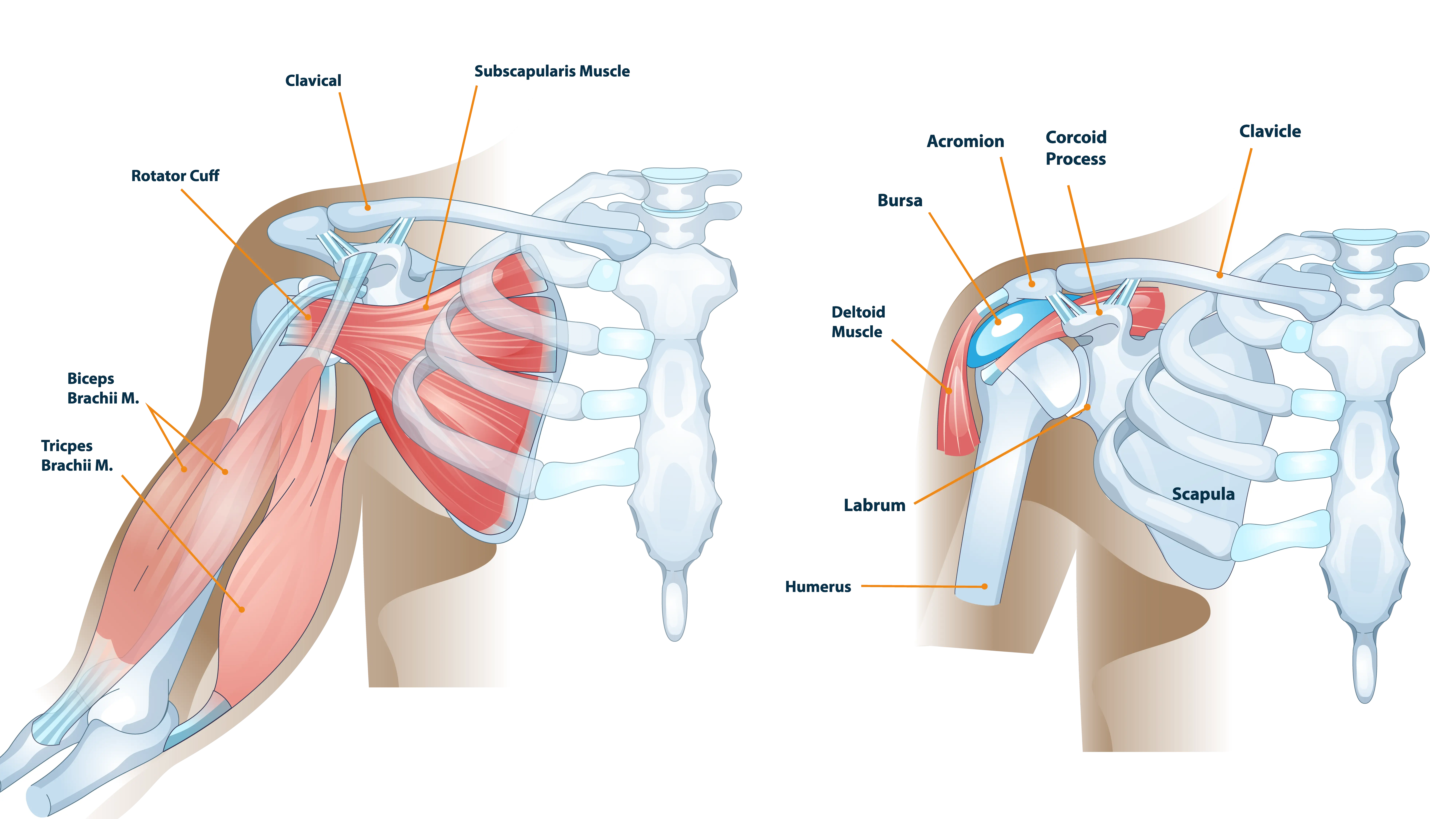
Three main bones converge to form the shoulder joint, or glenohumeral joint. Thehumerusis the long bone of the upper arm. Its rounded top, the humeral head, acts as the “ball.” Thescapula, or shoulder blade, contains a shallow socket called the glenoid. The third bone is theclavicle, or collarbone.
A smooth, resilient tissue calledarticular cartilagecovers the surfaces of the humeral head and the glenoid. This cartilage allows the bones to glide against each other without friction. It ensures smooth and pain-free movement. Surrounding the joint is therotator cuff. This is a group of four tendons and muscles that stabilize the joint and initiate movement. When any of these components become damaged, pain and stiffness can result.
When Is Total Shoulder Replacement Recommended?
A surgeon may recommend a total shoulder replacement after conservative, non-operative treatments have failed to manage a patient’s symptoms effectively. The most common reason for recommending this surgery is severe osteoarthritis. People often call this “wear-and-tear” arthritis. Over many years, the articular cartilage gradually thins and breaks down. This loss of cartilage can cause bone-on-bone friction. This friction generates significant pain and stiffness. Patients may find that their pain worsens with activity, and in some cases, it can even wake them up at night.
Several other conditions may also lead to a total shoulder replacement:
Rheumatoid Arthritis:This is an autoimmune disease. The body’s immune system mistakenly attacks the joint lining, causing inflammation. This chronic inflammation can destroy the articular cartilage over time.
Post-Traumatic Arthritis:A previous injury, such as a severe fracture or a dislocation, can damage the joint surfaces. This damage leads to premature wear and tear and results in arthritis.
In patients who have both advanced arthritis and a severely damaged or irreparable rotator cuff, your surgeon may recommend a different type of shoulder replacement, called areverse total shoulder arthroplasty, instead.
The Total Shoulder Replacement Procedure
The goal of atotal shoulder replacementis to resurface the damaged joint. Surgeons remove the painful, arthritic bone and cartilage. They then replace these surfaces with smooth, artificial implants to replicate the natural anatomy of the shoulder. The new “ball” attaches to the top of the humerus, and the new “socket” is attached to the glenoid bone of the scapula.
Preparing for a Successful Surgery
Preparation for atotal shoulder replacementbegins well before the day of the operation. A proactive approach to the pre-operative phase may contribute to a smoother surgery and recovery.
Medical Clearance and Pre-Operative Testing
Your surgeon’s office will coordinate necessary medical evaluations. These steps ensure you are healthy enough to undergo the procedure and general anesthesia. Pre-operative testing may include blood work, an electrocardiogram (EKG), and any necessary imaging tests.
Medication Management
You must discuss all prescription and over-the-counter medications with your surgeon. They will provide specific instructions on which medications to stop taking and when. Patients should also plan to pick up all post-operative pain medications and supplies before the surgery date.
Home Preparation
Preparing your home environment can simplify life during the first few weeks of recovery. You will wear a sling. You will also have limited use of the operated arm. This makes simple tasks surprisingly difficult.
Create a Recovery Station:Set up a comfortable area where you will spend most of your time. Place the remote control, phone, books, and medications within easy reach.
Prepare Meals:Cook and freeze several single-serving meals ahead of time. This prevents the need to cook with one arm.
Modify Clothing:Choose loose-fitting shirts that button or zip up the front. You will find it nearly impossible to pull shirts over your head.
Remove Hazards:Clear pathways and remove throw rugs. This minimizes the risk of a fall.
The Post-Operative Recovery Journey
Immediate Post-Operative Period
Immediately after surgery, the focus shifts to pain management and protection. Your medical team may use a combination of nerve blocks and medications to provide pain relief. The arm remains immobilized in a sling or immobilizer. This protects the healing soft tissues and the surgical repair. Patients learn safe techniques for moving and performing basic tasks with the non-operated arm.
Physical Therapy
Physical therapy is often an important part of regaining strength and mobility. While specific timelines and structures may vary, the recovery process can generally be divided into phases.
Phase 1:Protection and Passive Motion:The primary goal during this phase is to protect the surgical repair. The physical therapist focuses onpassive range of motion. This means the therapist, or sometimes a machine or the non-operated arm, moves the arm without the patient engaging the shoulder muscles. The goal is to prevent stiffness without stressing the healing joint.
Phase 2:Active Motion:Once the surgeon confirms adequate soft tissue healing, the patient may progress toactive range of motion. The patient now begins to move the arm using their own muscles. The therapist may also introduce light strengthening exercises. The goal is to restore independent use of the arm for daily activities.
Phase 3:Strengthening and Functional Return:This phase focuses on building strength and endurance. The patient generally begins more intensive strengthening exercises. They work toward returning to recreational activities. The therapist tailors the program to the patient’s specific lifestyle and goals.
The Long-Term Timeline
Recovery is a gradual process. It is not a sudden event. Patients should manage their expectations with patience and diligence. Often, steady improvements in function and range of motion take place over the first six months. Maximum recovery may take up to a year or even longer. Patients may continue to gain strength and refine their movement patterns well past the six-month mark.
It is important to remember that the longevity of the implant depends partly on the patient’s long-term care. Patients may be advised to avoid high-impact activities or heavy lifting. Regular follow-up appointments with the surgeon ensure that progress is regularly being checked and adjustments are made on a timely basis.
Summary
Total shoulder replacement is a well-established surgical option for patients whose shoulder pain and stiffness no longer respond to non-operative treatments. The procedure works by replacing the worn or damaged joint surfaces with smooth, artificial components. Preparing your home, managing medications, and completing all pre-operative evaluations can help set the stage for a smoother experience.
Recovery happens gradually and includes several phases of physical therapy focused on mobility, strength, and functional return. Most patients notice steady improvements within the first few months, with full recovery often continuing for up to a year or longer.
Choosing the right surgeon is an important decision you will make when evaluating treatment options. Jeff Zhao, DO, and his team at Dallas Orthopedic & Shoulder Insitute are committed to providing personalized, evidence-based care for patients considering total shoulder replacement.
Our Blogs
Total Shoulder Replacement
Total Shoulder Replacement
Chronic shoulder pain can limit daily activities, disrupt sleep, and lead to a frustrating cycle of reduced mobility and increasing discomfort. When non-surgical treatments no longer provide adequate relief, a procedure known as total shoulder replacement, or total shoulder arthroplasty, may be recommended. It involves replacing the damaged surfaces of the shoulder joint with smooth, artificial components. The goal is to alleviate pain and restore functional movement.
Understanding the Anatomy of the Shoulder Joint
The shoulder is one of the most complex and mobile joints in the human body. It functions as a ball-and-socket joint. This design permits an impressive range of motion. This mobility, however, also makes the joint susceptible to wear and injury over time.
Three main bones converge to form the shoulder joint, or glenohumeral joint. Thehumerusis the long bone of the upper arm. Its rounded top, the humeral head, acts as the “ball.” Thescapula, or shoulder blade, contains a shallow socket called the glenoid. The third bone is theclavicle, or collarbone.
A smooth, resilient tissue calledarticular cartilagecovers the surfaces of the humeral head and the glenoid. This cartilage allows the bones to glide against each other without friction. It ensures smooth and pain-free movement. Surrounding the joint is therotator cuff. This is a group of four tendons and muscles that stabilize the joint and initiate movement. When any of these components become damaged, pain and stiffness can result.
When Is Total Shoulder Replacement Recommended?
A surgeon may recommend a total shoulder replacement after conservative, non-operative treatments have failed to manage a patient’s symptoms effectively. The most common reason for recommending this surgery is severe osteoarthritis. People often call this “wear-and-tear” arthritis. Over many years, the articular cartilage gradually thins and breaks down. This loss of cartilage can cause bone-on-bone friction. This friction generates significant pain and stiffness. Patients may find that their pain worsens with activity, and in some cases, it can even wake them up at night.
Several other conditions may also lead to a total shoulder replacement:
Rheumatoid Arthritis:This is an autoimmune disease. The body’s immune system mistakenly attacks the joint lining, causing inflammation. This chronic inflammation can destroy the articular cartilage over time.
Post-Traumatic Arthritis:A previous injury, such as a severe fracture or a dislocation, can damage the joint surfaces. This damage leads to premature wear and tear and results in arthritis.
In patients who have both advanced arthritis and a severely damaged or irreparable rotator cuff, your surgeon may recommend a different type of shoulder replacement, called areverse total shoulder arthroplasty, instead.
The Total Shoulder Replacement Procedure
The goal of atotal shoulder replacementis to resurface the damaged joint. Surgeons remove the painful, arthritic bone and cartilage. They then replace these surfaces with smooth, artificial implants to replicate the natural anatomy of the shoulder. The new “ball” attaches to the top of the humerus, and the new “socket” is attached to the glenoid bone of the scapula.
Preparing for a Successful Surgery
Preparation for atotal shoulder replacementbegins well before the day of the operation. A proactive approach to the pre-operative phase may contribute to a smoother surgery and recovery.
Medical Clearance and Pre-Operative Testing
Your surgeon’s office will coordinate necessary medical evaluations. These steps ensure you are healthy enough to undergo the procedure and general anesthesia. Pre-operative testing may include blood work, an electrocardiogram (EKG), and any necessary imaging tests.
Medication Management
You must discuss all prescription and over-the-counter medications with your surgeon. They will provide specific instructions on which medications to stop taking and when. Patients should also plan to pick up all post-operative pain medications and supplies before the surgery date.
Home Preparation
Preparing your home environment can simplify life during the first few weeks of recovery. You will wear a sling. You will also have limited use of the operated arm. This makes simple tasks surprisingly difficult.
Create a Recovery Station:Set up a comfortable area where you will spend most of your time. Place the remote control, phone, books, and medications within easy reach.
Prepare Meals:Cook and freeze several single-serving meals ahead of time. This prevents the need to cook with one arm.
Modify Clothing:Choose loose-fitting shirts that button or zip up the front. You will find it nearly impossible to pull shirts over your head.
Remove Hazards:Clear pathways and remove throw rugs. This minimizes the risk of a fall.
The Post-Operative Recovery Journey
Immediate Post-Operative Period
Immediately after surgery, the focus shifts to pain management and protection. Your medical team may use a combination of nerve blocks and medications to provide pain relief. The arm remains immobilized in a sling or immobilizer. This protects the healing soft tissues and the surgical repair. Patients learn safe techniques for moving and performing basic tasks with the non-operated arm.
Physical Therapy
Physical therapy is often an important part of regaining strength and mobility. While specific timelines and structures may vary, the recovery process can generally be divided into phases.
Phase 1:Protection and Passive Motion:The primary goal during this phase is to protect the surgical repair. The physical therapist focuses onpassive range of motion. This means the therapist, or sometimes a machine or the non-operated arm, moves the arm without the patient engaging the shoulder muscles. The goal is to prevent stiffness without stressing the healing joint.
Phase 2:Active Motion:Once the surgeon confirms adequate soft tissue healing, the patient may progress toactive range of motion. The patient now begins to move the arm using their own muscles. The therapist may also introduce light strengthening exercises. The goal is to restore independent use of the arm for daily activities.
Phase 3:Strengthening and Functional Return:This phase focuses on building strength and endurance. The patient generally begins more intensive strengthening exercises. They work toward returning to recreational activities. The therapist tailors the program to the patient’s specific lifestyle and goals.
The Long-Term Timeline
Recovery is a gradual process. It is not a sudden event. Patients should manage their expectations with patience and diligence. Often, steady improvements in function and range of motion take place over the first six months. Maximum recovery may take up to a year or even longer. Patients may continue to gain strength and refine their movement patterns well past the six-month mark.
It is important to remember that the longevity of the implant depends partly on the patient’s long-term care. Patients may be advised to avoid high-impact activities or heavy lifting. Regular follow-up appointments with the surgeon ensure that progress is regularly being checked and adjustments are made on a timely basis.
Summary
Total shoulder replacement is a well-established surgical option for patients whose shoulder pain and stiffness no longer respond to non-operative treatments. The procedure works by replacing the worn or damaged joint surfaces with smooth, artificial components. Preparing your home, managing medications, and completing all pre-operative evaluations can help set the stage for a smoother experience.
Recovery happens gradually and includes several phases of physical therapy focused on mobility, strength, and functional return. Most patients notice steady improvements within the first few months, with full recovery often continuing for up to a year or longer.
Choosing the right surgeon is an important decision you will make when evaluating treatment options. Jeff Zhao, DO, and his team at Dallas Orthopedic & Shoulder Insitute are committed to providing personalized, evidence-based care for patients considering total shoulder replacement.
Our Locations

Dallas Orthopedic and Shoulder Institute - Sunnyvale
Office Hours
Monday through Friday - 8:00am – 5:00pm
Saturday & Sunday – CLOSED
Motion Performance Therapy - Sunnyvale
Clinic Hours
Monday through Thursday - 7:00 am - 5:30 pm
Friday, Saturday & Sunday - CLOSED
Phone Number:
214-256-3778
Address
222 South Collins Road, Suite 101
Sunnyvale, TX 75182

Dallas Orthopedic and Shoulder Institute - Kaufman
Office Hours
Monday through Thursday - 8:00am – 5:00pm
Friday, Saturday & Sunday - CLOSED
Motion Performance Therapy - Kaufman
Clinic Hours
Monday through Thursday - 7:00 am - 5:30 pm
Friday, Saturday & Sunday - CLOSED
Phone Number:
214-256-3778
Address
874 Ed Hall Dr Suite 104, Kaufman, TX 75142 (Professional building next to Texas Health Presbyterian Hospital in Kaufman)

Dallas Orthopedic and Shoulder Institute - Ennis
Office/Clinic Hours
Wednesdays - 8:00 am – 5:00 pm
Saturday & Sunday - CLOSED
Phone Number:
214-256-3778
Address
206 S Clay St, Ennis, TX 75119
Our Locations

Dallas Orthopedic and Shoulder Institute - Sunnyvale
Office Hours
Monday through Friday - 8:00am – 5:00pm
Saturday & Sunday – CLOSED
Dallas Orthopedic and Shoulder Institute - Sunnyvale
Clinic Hours
Monday through Thursday - 7:00 am - 5:30pm
Friday, Saturday & Sunday - CLOSED
Phone Number:
214-256-3778
Address
222 South Collins Road, Suite 101
Sunnyvale, TX 75182

Dallas Orthopedic and Shoulder Institute - Kaufman
Office Hours
Monday through Thursday - 8:00am –5:00pm
Friday, Saturday & Sunday - CLOSED
Motion Performance Therapy - Kaufman
Clinic Hours
Monday through Thursday - 8:00am –5:00pm
Friday, Saturday & Sunday - CLOSED
Phone Number:
214-256-3778
Address
874 Ed Hall Dr Suite 104, Kaufman, TX 75142 (Professional building next to Texas Health Presbyterian Hospital in Kaufman)
Copyright 2026Dallas Orthopedic and Shoulder Institute. All rights reserved